



Published: 01/09/2026

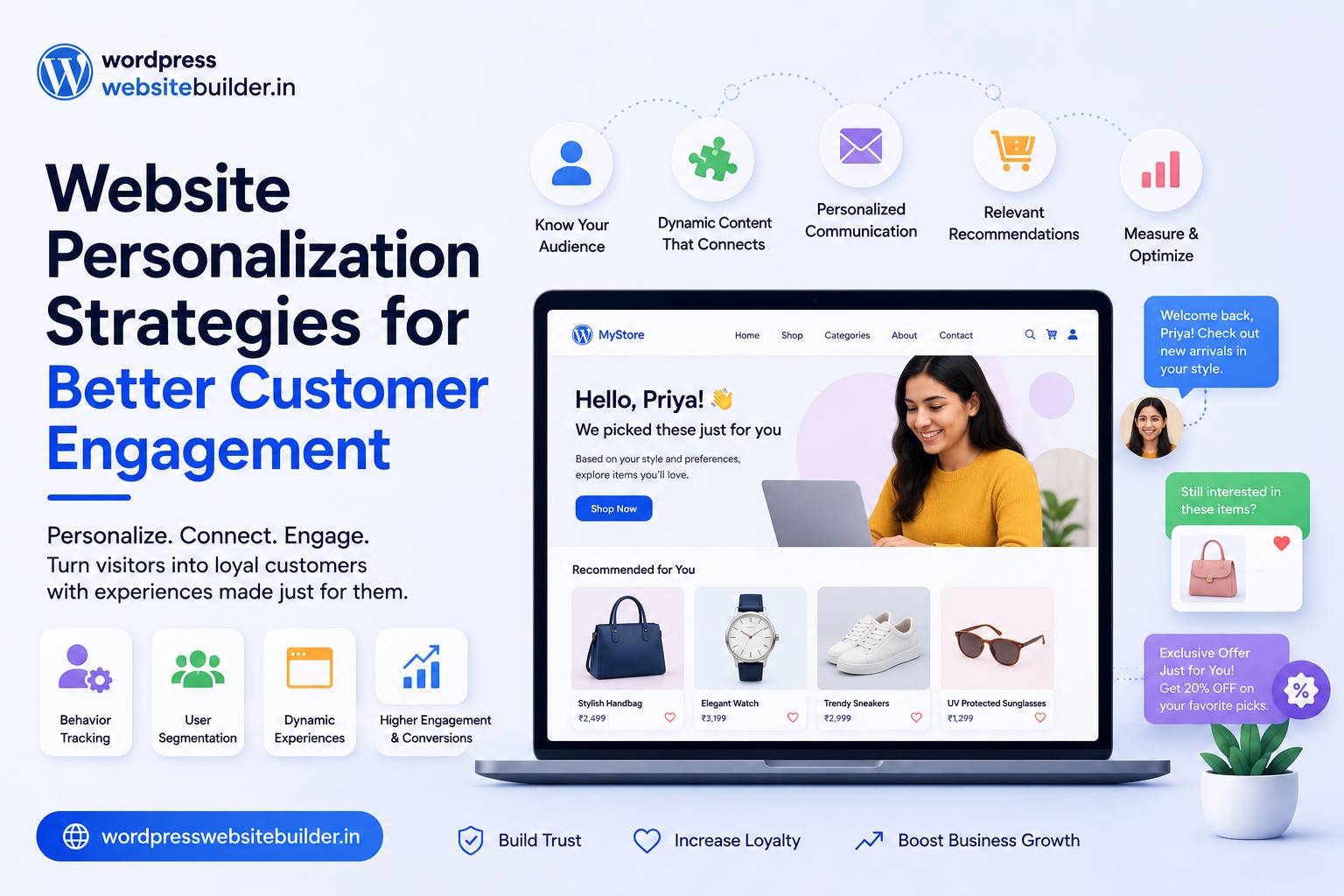
A website becomes more valuable when it responds to what individual visitors actually need. A wordpress website builder can be used to build personalized experiences in which the content, offers, navigation, and calls to action are more relevant to various audiences. Businesses can utilize customer insights to make every interaction more helpful instead of delivering the same information to all.
Personalization does not mean that you need totally different websites to all visitors. Minor, considerate changes can simplify the navigation, enhance interaction, and assist customers in finding information that suits their interests and phase of the purchase process.
A wordpress website builder gives businesses the flexibility to create different content experiences for clearly defined customer groups. Prior to personalizing anything, find significant differences among visitors, including where they live, their interests, their purchase history or why they are visiting.
These patterns can be identified through website analytics, customer feedback, sales conversations, and support requests. Knowing what various audiences really require helps businesses to avoid introducing personalization features that may appear impressive but have little practical use.
Visitors hardly come with the same intentions. A researcher on a problem might require educational information, whereas a returning visitor might be comparing products or be ready to get in touch with the business.
Individualized content can address these variations by emphasizing pertinent guides, services, products, or resources. The idea is to enable visitors to locate useful information without having to go through content that is not relevant to their case.
When location does influence the needs of the customer, geographic information can be used to make the experiences of the websites more useful. Local pricing, delivery, store, local services, and contact options can be tailored to various audiences.
A wordpress website builder can support region-specific landing pages and content structures while maintaining a consistent brand identity. Local relevance must be precise and clear enough to make the visitors aware of what information is being conveyed to them.
Product suggestions can assist the customers to find products that they would not have found otherwise. It can be convenient to display related products, complementary services, or relevant resources to facilitate the purchasing process.
The recommendations must be made on the basis of true relevance and not just showing more products. When recommendations are relevant to the interests or past interactions of a visitor, they can enhance exploration and make the site seem more useful.
A first-time visitor may not be ready to make a purchase or request a consultation. Meanwhile, someone returning after several visits may already understand the offering and need a direct path toward taking action.
These various stages can be reflected in personalized calls to action. Educational downloads, product comparisons, consultations, demonstrations, and purchase options may have various purposes based on the intent of the visitor.
Customers who have been returning should not necessarily be given the same introductory experience as those who are first-time visitors. The acknowledgement of past interactions can be used to generate continuity and minimise redundant repetition.
Companies can showcase products that have been viewed recently, new content that is relevant, saved preferences, or helpful follow-up materials. These little details can help returning visitors feel that the site is aware of what they were interested in before.
Mobile users tend to have a smaller screen space and less attention span, so personalization should be based on convenience and not more visual complexity.
Mobile browsing can be made more efficient with relevant shortcuts, location-based contact options, simplified navigation, and context-specific recommendations. All customized features must assist users to achieve their objectives with minimal unnecessary processes.
The preferences of customers vary as their situations, interests, and relations to a brand evolve. A personalization strategy that is effective today might not be effective in the future due to the changing audience.
It is easier to update content and make adjustments to a wordpress website builder. Frequently checking the customer behaviour makes personalised experiences not obsolete or redundant.
Personalization relies on customer information, and it is crucial to take care of data management. To enhance the experience, visitors need to know what information is being gathered and how it is being used.
Confidence can be ensured by clear privacy policies and transparent data practices, and personalization must offer some noticeable value without making visitors feel that their online behavior is being monitored unnecessarily.
All personalization features will not enhance engagement. An apparently helpful change might not make much difference, whereas a minor change can make a huge difference in terms of conversions or time on a page.
Use analytics, customer feedback, and controlled testing to evaluate results. Track the engagement, conversions, recurring visits, and other indicators and implement the effective personalization strategies throughout the site.
Successful personalization is all about making customers feel that a site knows what they require. Digital interactions can be made more engaging by relevant content, location-based information, product recommendations, smarter calls to action, and helpful returning-visitor experiences. A wordpress website builder provides a flexible foundation for developing and refining these experiences over time.
© Shopify Website Builder All rights reserved.