



Published: 12/10/2026

Website security is essential for protecting your content, customer information, and reputation. Attackers can use simple vulnerabilities to gain access to accounts, steal data, or disrupt website operations. Fortunately, you do not need technical skills to improve security. Following a few practical habits can make your website safer.
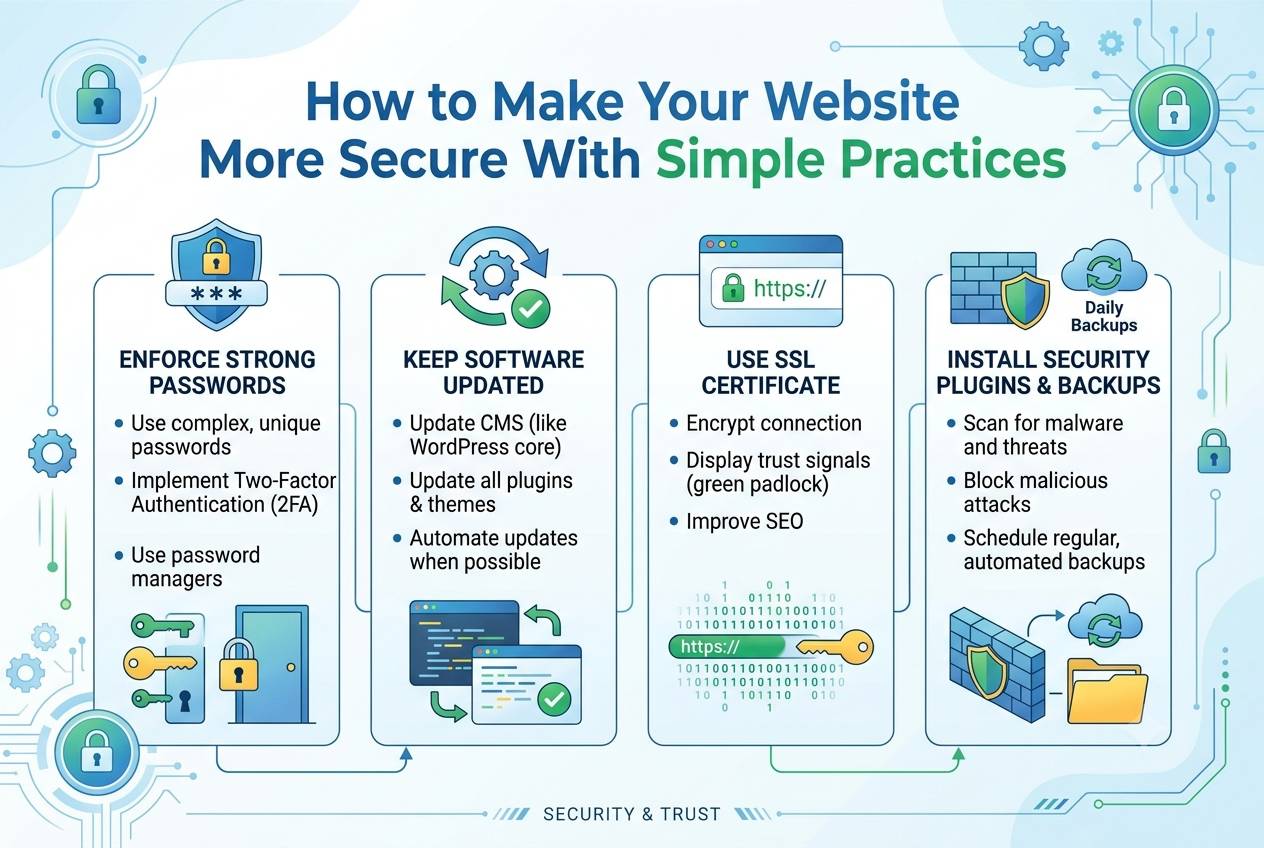
Regularly update your website platform to address security vulnerabilities and enhance protection against new threats. A reliable wordpress website builder can simplify this process.
Always update plugins and themes used as old components might have vulnerabilities that can be used by attackers. Unused extensions should be removed to minimize unnecessary security risks.
Check update notifications frequently so important security patches are not overlooked. Install reliable updates as soon as you are sure they are compatible with your website.
Always make a backup before major software updates to safeguard your website against unexpected problems. This enables faster recovery if an update has conflicts.
Use software from reputable developers with consistent maintenance and security support. Avoid abandoned plugins or themes that no longer receive important updates.
One of the simplest and efficient methods of securing your website accounts against unauthorized access is the use of strong passwords. Good password practices can significantly reduce common security risks.
Two-factor authentication provides extra security to online accounts. When configured, a wordpress website builder can facilitate secure login. Users will provide a second verification method after entering their password. This can be a code from an authenticator app. When passwords are stolen, this additional measure can be taken to avoid access.
SSL certificate assists in encrypting information shared between your website and users. It provides security to login information, contact forms, payment and other sensitive information. The presence of HTTPS will assure visitors that you have a secure connection on your website. Maintain the certificate and renew it before expiry. This will help in enhancing website security.
Regular website backups protect important files and data from accidental loss. Make backups regularly and save them in different locations other than your own website. Test backups regularly to ensure they work when needed. Backup tools and plugins can be supported by a wordpress website builder. Reliable backups make recovery faster after security incidents or technical problems.
Not every person working on your website needs administrator-level permissions. Give users only the access required for their specific responsibilities. Close down idle accounts and check permissions periodically to reduce unneeded exposure. This will minimize the effect of compromised credentials. It also keeps website management more organized and secure.
Select plugins and themes from reputable developers who have a strong maintenance record. Outdated components may contain vulnerabilities that attackers can exploit. Remove unused plugins and themes to reduce unnecessary risks. A wordpress website builder can make managing trusted components easier. Always check the updates before installing them on your website.
Automated attacks and unauthorized access are common on your login page. Use strong passwords and enable two-factor authentication for added protection. Limit repeated login attempts to reduce brute-force attacks. Avoid sharing administrator credentials with others. Periodically check on the login activity for abnormal attempts or suspicious account activity.
Regularly monitoring your website can help identify suspicious activity early. Monitor suspicious logins, new users, unexpected content modifications, or strange website activity. Security warnings can be used to point out possible threats. A wordpress website builder can provide a website activity monitoring and management tool. Early intervention may reduce the possible damage.
Complex solutions are not needed to secure websites. Maintaining software, strong passwords, backups, and restricted access can help avert most common threats. Periodic checks allow one to detect suspicious activity. Regular security measures make your website more secure, reliable and safer in the long run.
© Shopify Website Builder All rights reserved.