



Published: 01/09/2026

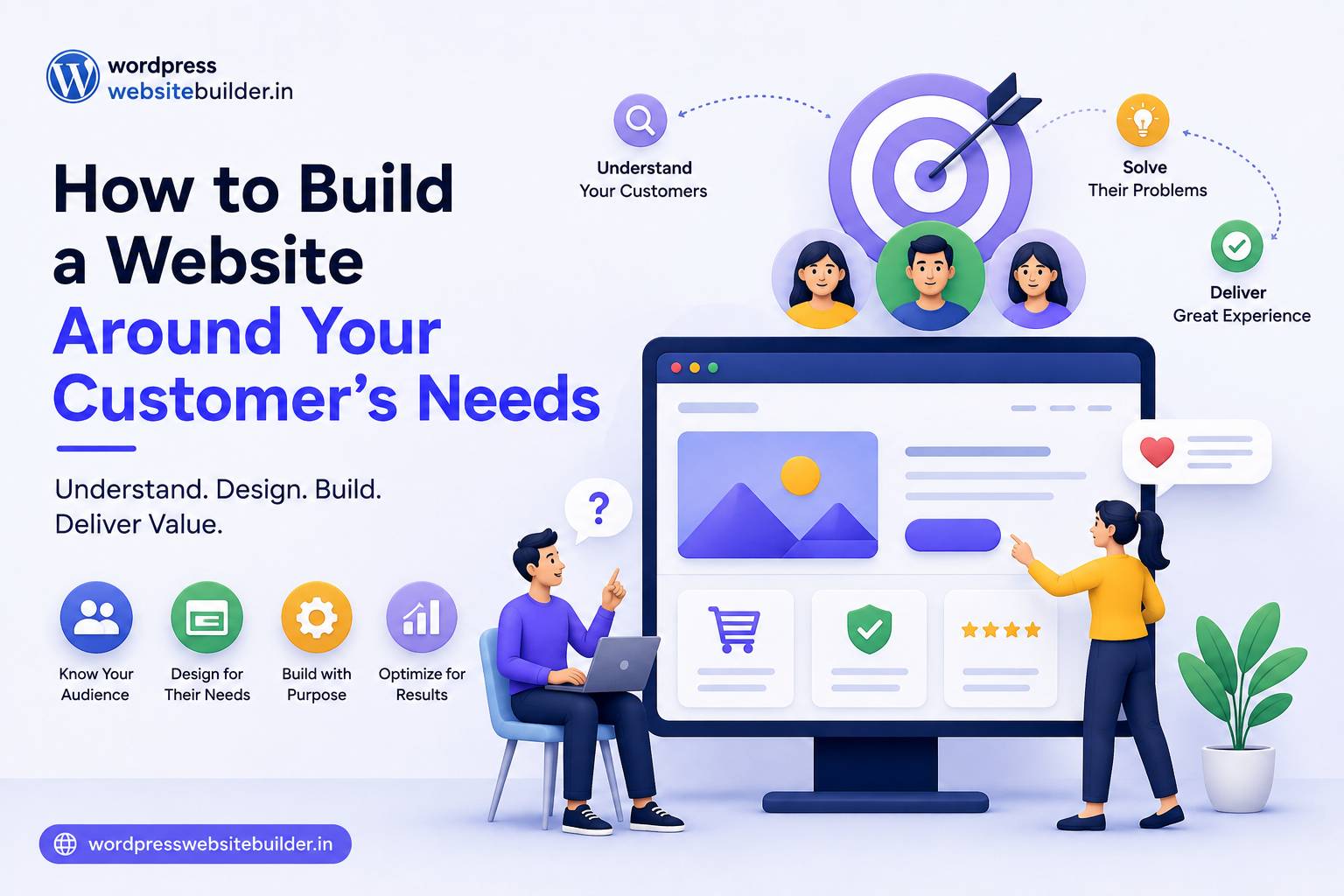
An online customer-oriented site starts by knowing what customers want to get out of their web experience. A wordpress website builder gives businesses the flexibility to create pages, navigation, and features around those expectations rather than forcing visitors to adapt to a rigid website structure.
Building around customers requires more than attractive visuals. The site must provide answers, make decisions easier, lessen frustration, and direct the visitors to helpful activities depending on their personal needs.
A wordpress website builder can help turn frequently asked customer questions into dedicated pages, FAQs, guides, and helpful resources. Prior to developing these sections, consult with sales and support teams to determine the most frequently asked questions by customers.
Such discussions can expose issues and information gaps that might not be evident in the normal planning of websites. The direct answers to those questions will make the site more helpful and will make the visitors feel sure about their next steps.
All visitors do not come with the same purpose. Educational information might be required to a first-time visitor, whereas a current customer might be seeking pricing, support, or a fast method to reach your team.
The mapping of various customer journeys assists in deciding what information is to be presented at any given stage. It also avoids the situation of designing each page based on the same audience or buying intent.
The navigation of the websites must be based on the way the customers think and not the way your company is structured internally. Visitors must be in a position to find products, services, resources and contact options without knowing your business structure.
Using a wordpress website builder, businesses can restructure menus, categories, landing pages and internal links as they get to know more about user behaviour. Logical navigation minimizes the needless searching and provides a more convenient browsing experience.
An effective site must be compatible with individuals with various devices, browsers, connection speeds, and accessibility aids. Customers can shop on smartphones on a commute or on bigger screens when they are doing research on a purchase at home.
The experience is made easier by responsive layouts, legible typography, reachable forms, understandable buttons, and suitable contrast, which makes the experience more accessible to a broader audience. Design choices must eliminate barriers instead of adding more work to visitors.
WordPress website builder allows organizing detailed service pages, product sections, case studies, and comparison resources around customer questions. Such resources will enable the visitors to know what you have to offer before they make a decision whether to get in touch with your business.
Lack of information can lead to unnecessary hesitation. Clear pricing where appropriate, specifications, policies, testimonials, demonstrations, and explanations can give potential customers greater confidence in their decisions.
Customers are not supposed to undergo a number of unnecessary processes to perform a simple task. Long checkout procedures, complex forms, annoying pop-ups, and overly confirmatory screens can be annoying in a short time.
Look at key customer experiences throughout and eliminate anything that is not part of the objective of the visitor. Making these interactions simpler can enhance usability and provide more chances to make successful conversions.
Useful information must not just appeal to search engine visitors. It ought to assist individuals to comprehend their choices, resolve issues, evaluate alternatives, and decide on their course of action.
A wordpress website builder accommodates various formats, such as blogs, landing pages, case studies, resource centres, and learning materials. Arranging these resources in accordance with the actual customer issues makes the site more useful during the purchase process.
Poor website decisions can be easily caused by customer assumptions. Analytics will give helpful data regarding the most visited pages, exit points, traffic, and conversion behaviour.
Direct feedback provides an additional level of insight. Frustrations that cannot be explained by data on websites can be identified through reviews, surveys, support conversations, interviews, and usability testing.
The expectations of customers vary with the evolving products, markets, technology, and buying patterns. A site that is functional today might require some changes as viewers evolve with new demands.
The experience can be maintained by regularly reviewing content, navigation, accessibility, performance and conversion paths. Even minor adjustments made regularly can prove to be more effective than waiting a few years and then redesigning once again.
Every significant interaction should be clear and purposeful on a site that is constructed based on customer needs. Visitors are expected to be able to locate information, comprehend their choices, and perform actions they want without being unnecessarily confused.
A wordpress website builder can offer the flexibility needed to continue enhancing the experience as the customer expectations evolve. The site is not just an online presence when real questions, behaviour and feedback guide the decisions. It becomes a practical tool for building trust, encouraging engagement, and supporting sustainable business growth.
© Shopify Website Builder All rights reserved.